
 Concentric Staff
Material handling leaders are under constant pressure to reduce costs while maintaining productivity. In most warehouse operations, labor remains the largest operating expense, followed by facility costs and the equipment required to keep goods moving. Forklifts and other material-handling equipment represent a significant investment, but many organizations focus primarily on acquisition costs rather than the total cost of ownership (TCO).
The reality is that the purchase price is only one piece of the equation. Over the life of a forklift, energy, maintenance, repairs, downtime, and asset utilization have a much greater impact on total operating costs than the initial purchase itself. Studies consistently show that operating expenses often far exceed acquisition costs throughout a forklift's lifecycle. For example, a forklift purchased for $30,000 to $45,000 can incur operating costs of $1.50 to $3.00 per hour over its lifetime, with maintenance representing a substantial portion of those expenses.
That's why organizations looking to reduce fleet costs should start with maintenance optimization. At Concentric, operational and power assessments frequently uncover substantial opportunities to improve uptime, reduce service expenses, and extend equipment life. Common issues include incomplete maintenance records, inconsistent preventative maintenance execution, and a lack of actionable fleet data.
Many companies believe they have an effective preventative maintenance (PM) program because they have a service contract in place. But ask yourself:
-
How many service events occur between scheduled PMs?
-
Are PM inspections identifying issues before failures occur?
-
Are maintenance findings driving component upgrades or planned repairs?
-
Can you measure mean time between failures (MTBF)?
If the answer to these questions is unclear, your preventative maintenance program likely has room for improvement.
And before considering proactive maintenance technologies and AI-driven maintenance strategies, it is essential to optimize the fundamentals.
Why Preventative Maintenance Still Matters
Proactive maintenance often receives the spotlight because of advances in telematics, IoT sensors, and artificial intelligence. However, proactive maintenance is only effective when it builds on a disciplined and well-documented preventative maintenance program.
Industry experts note that telematics systems are increasingly capable of monitoring equipment health, usage patterns, battery performance, fault codes, and operator behavior in real time. These insights can help organizations predict failures before they occur, but only if accurate maintenance processes already exist.
In other words, preventative maintenance is the foundation that supports proactive maintenance success.
Phase 1: Three Steps to Optimize Preventative Maintenance
1. Leverage Fleet Data
The days of managing forklifts using spreadsheets and paper maintenance records are rapidly disappearing.
Today's telematics solutions can provide detailed information on:
-
Equipment utilization
-
Impact events
-
Battery health
-
Service intervals
-
Operator performance
-
Fault codes and diagnostics
When combined with maintenance and cost data, organizations gain a comprehensive view of fleet performance and expenses. Modern telematics platforms increasingly use proactive analytics to identify potential failures before they result in downtime.
Whether your organization builds an internal reporting system or partners with a fleet management provider, success depends on accountability. Assign ownership of the data, establish regular reporting reviews, and ensure recommendations drive action.
Key metrics to track include:
-
Preventative maintenance compliance rate
-
Mean time between failures (MTBF)
-
Cost per operating hour
-
Service events between PMs
-
Equipment downtime
2. Implement an Effective Preventative Maintenance Program
Having a PM program is not the same as having an effective one.
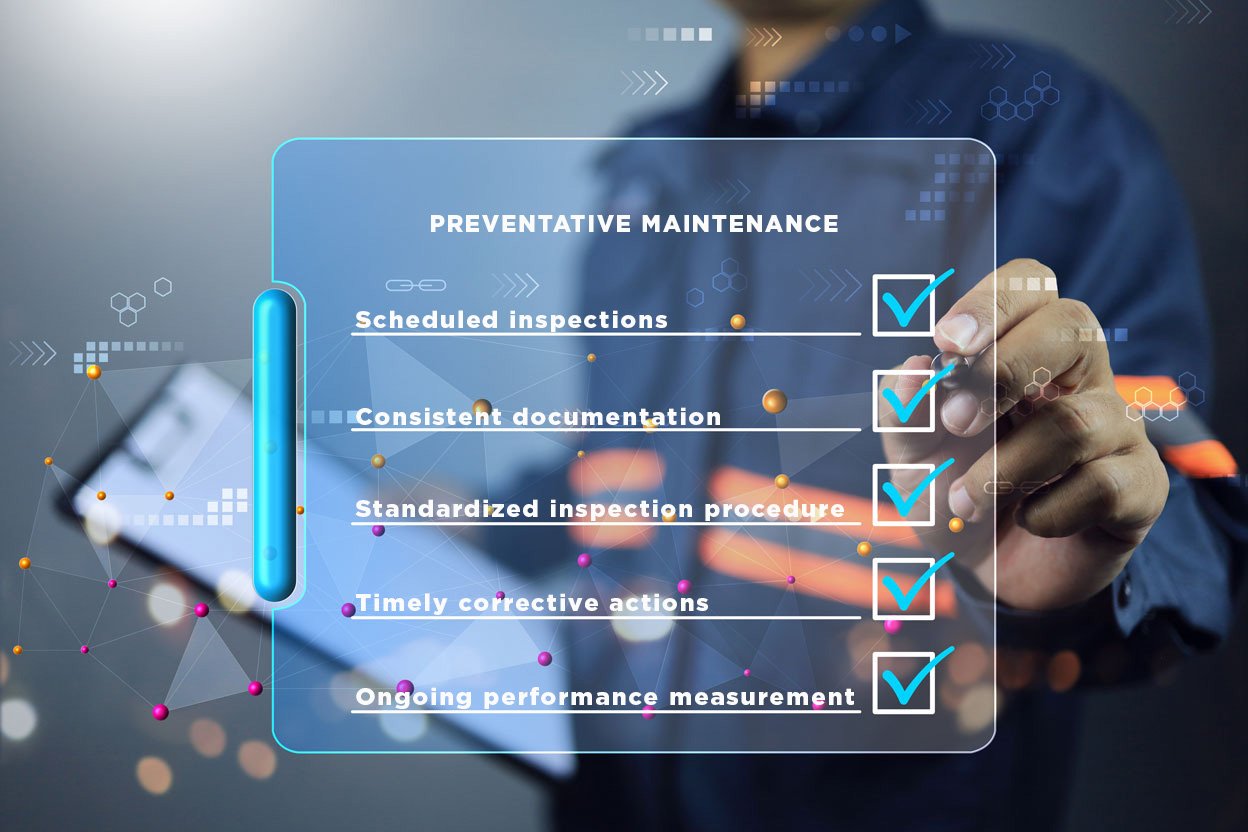
An effective preventative maintenance program requires:
-
Scheduled inspections based on operating hours
-
Consistent documentation
-
Standardized inspection procedures
-
Timely corrective actions
-
Ongoing performance measurement
Regular preventative maintenance helps extend equipment life, reduce emergency repairs, and minimize costly downtime. Equipment maintenance experts consistently identify preventative maintenance as one of the most effective ways to reduce lifetime operating costs and avoid unexpected breakdowns.
The key is ensuring inspections lead to action, not simply completed paperwork.
Organizations should routinely evaluate:
-
PM completion rates
-
Repeat failure trends
-
Technician findings
-
Parts replacement history
-
Downtime causes
3. Create a Prevention-Focused Maintenance Culture
Technology and processes alone cannot deliver lasting results.
One of the most overlooked factors in maintenance success is culture.
Maintenance technicians are natural problem-solvers. Many enjoy troubleshooting failed equipment and restoring operations quickly. While those skills are valuable, the greatest long-term impact comes from preventing failures altogether.
Creating a preventative culture means recognizing and rewarding activities that reduce downtime before it occurs.
Successful organizations encourage technicians to:
-
Review equipment data before beginning work
-
Prioritize maintenance based on asset health
-
Follow data-driven work orders
-
Focus on root-cause analysis
-
Measure success through uptime improvements
As telematics and AI tools become more sophisticated, technicians who are already accustomed to using data will be better positioned to take advantage of proactive maintenance technologies.
The Road to Proactive Maintenance Starts Here
Proactive maintenance promises significant benefits, including reduced downtime, improved asset life, and lower maintenance costs. However, organizations that skip preventative maintenance optimization often struggle to realize those gains.
Before investing in advanced analytics or AI-driven maintenance tools, make sure your operation can answer these questions:
-
Are all PMs completed on schedule?
-
Can you measure MTBF?
-
Is maintenance data tracked centrally?
-
Are repair trends documented and analyzed?
-
Do technicians use data to prioritize maintenance activities?
If not, preventative maintenance remains your greatest opportunity for improvement.
Organizations that combine disciplined PM practices, fleet data visibility, and a prevention-focused culture create the foundation necessary for long-term cost reduction, higher uptime, and a successful transition to proactive maintenance.
With the right maintenance strategy and service partner, you can improve equipment performance, reduce unplanned downtime, and keep your fleet running at its best. Ready to take the next step?
Contact us to connect with a Concentric expert and explore maintenance solutions designed for your facility.