

 Concentric Staff
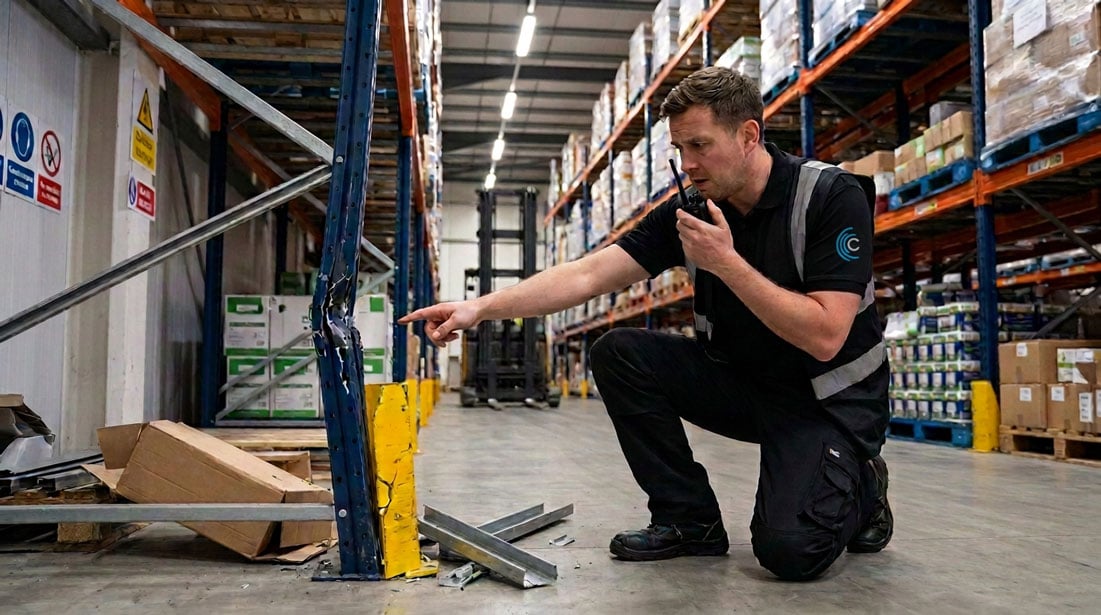
When a facility brings in an embedded technician from Concentric, the primary mission is maintenance: keeping material handling equipment and automation systems running reliably. Full-time or part-time, these technicians become a true extension of your team, focused on preventative maintenance, equipment repairs, analytics, and continuous improvement to reduce unplanned downtime.
That consistent on-site presence creates a broader operational advantage. As they become familiar with the people, processes, and equipment that keep the facility running, they're often among the first to notice when something is out of place, helping address issues before they impact productivity, reliability, or safety.
Why On-Site Presence Matters for Facility Safety
Awareness gaps are a leading cause of workplace incidents. Workers in loud environments, wearing hearing protection, or navigating around equipment can easily miss nearby hazards. A blocked sightline, a change in workflow that increases risk, or a warning system that has stopped functioning may seem like small issues, but they are often the kinds of problems a consistent on-site presence can identify long before a scheduled inspection.
That dual value is built into the embedded model itself: reliability and awareness come from the same source.
Beyond Maintenance: What Embedded Technicians Often Notice
As Concentric's embedded technicians move through a facility performing their regular maintenance work, they're exposed to infrastructure and environmental details that point to broader safety and operational opportunities:
Warning systems. Visual and audible alerts, flashing lights, floor-projected indicators, and sound-producing alarms help workers notice nearby activity before it becomes a hazard. A technician servicing nearby equipment may be the first to spot when these systems need attention. According to OSHA, warning devices should be used before entering areas with limited visibility, such as blind intersections.
Traffic signals and mirrors. Signal lights at low-visibility intersections and overhead dome mirrors at cross-aisles improve how well workers can see what's coming. Gaps in coverage are easy to miss on a scheduled visit but more apparent to someone moving through those areas every day.
Layout and traffic flow. Separating pedestrian and equipment paths reduces risk for everyone on the floor. An embedded technician who sees daily workflow changes is well-placed to flag when designated lanes or boundaries start to break down.
When Observations Become Operational Insights
Safety measures only work if someone is around to notice when they stop working. Over time, an embedded technician may observe a speed limit being ignored in a certain area, a workstation barrier being bypassed, or equipment activity creeping into high-traffic zones near break rooms or exits.
These observations feed naturally into conversations with facility managers, not as a formal audit, but as part of being embedded in daily operations. Ground-level awareness like this supports both safety and morale without requiring a separate program to capture it. As NIOSH has noted, high-pedestrian areas such as main entrances, cafeterias, and time clock areas are especially worth monitoring, and that's easier to do consistently when someone is already there.
Putting It All Together: Maintenance, Presence, and Safety
Concentric's embedded technicians are there to keep material handling equipment and automation systems running. That's their job. But the same daily presence that drives uptime and continuous improvement also puts them in a strong position to notice when something isn't right and to say so.
The result is an operation that benefits from both reliable equipment performance and an informed set of eyes on the floor.
To learn more about how a full-time or part-time embedded technician from Concentric can support your facility, reach out to request a maintenance assessment.