

 Concentric Staff
Securing the right financing for industrial power equipment has never been more crucial. As global infrastructure investments surge, requiring $1.4 trillion in U.S. power‑sector capital between 2025 and 2030, strategic decisions are being made to modernize the grid, integrate renewables, and strengthen resilience. Facility leaders are protecting critical assets, advancing infrastructure upgrades, renewing fleets, and balancing OPEX and CAPEX. Concentric can help relieve some of the pressure by offering flexible financing and leasing strategies tailored to your goals. Here’s how.
Choosing the Right Financial Path
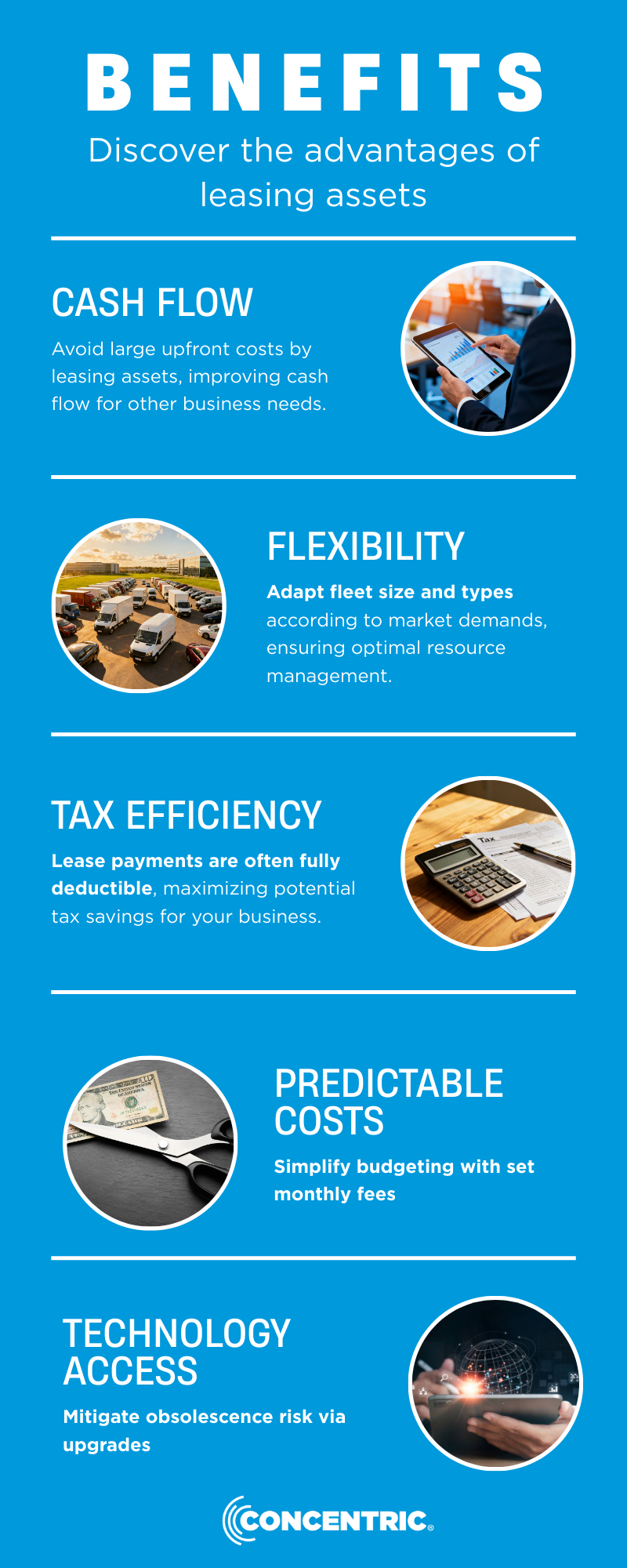
Equipment leasing not only preserves working capital but also spreads cost predictability and safeguards against obsolescence. Leasing offers:
-
$0.00 upfront costs and fixed monthly payments, improving cash flow.
-
Tax-deductible payments under operating lease structures, with favorable treatment under Section 179.
-
Access to credits for upgrades, and flexibility to return or update equipment at lease-end, reducing long-term risk.
Power Infrastructure Investments
As power demand continues to rise, driven in part by the rapid expansion of data centers, which could account for up to 9% of U.S. electricity consumption by 2030, investment in power infrastructure is accelerating. To scale efficiently, organizations are increasingly relying on equipment‑focused financing, rental, and leasing solutions rather than funding large upgrades entirely up front.
Key trends shaping power infrastructure investment include:
-
U.S. grid investment was expected to reach $115 billion in 2025, contributing to a global power‑infrastructure buildout exceeding $470 billion.
-
Federal programs such as the IIJA and IRA have committed more than $170 billion to infrastructure projects, helping mobilize over $104 billion in private capital.
-
More than 57% of U.S. equipment and software investment was financed in 2023, totaling $1.34 trillion, highlighting the central role of equipment financing in large‑scale infrastructure deployment.
By using leasing and rental financing structures, organizations can move forward with major power and equipment upgrades while preserving capital, maintaining budget flexibility, and aligning costs with asset lifecycles.
New Fleet Considerations
For fleets using motive or critical equipment, leasing supports fleet modernization without tying up capital:
- Approximately 80% of equipment acquisitions were financed in 2025
- Operating leases enable periodic upgrades, minimizing downtime and aligning fleet refresh cycles with technological advances.
Total cost of ownership analysis enables organizations to compare financing models and align them with planned fleet lifecycle strategies.
Opex vs. Capex: Pros & Cons
When determining Opex vs. Capex, consider:
CapEx
- ✓ Asset ownership builds equity and provides long-term depreciation benefits.
- ✕ High upfront costs may limit flexibility and increase balance sheet liabilities.
OpEx (Leasing)
- ✓ Delivers predictable monthly expense, budgeting ease, and off-balance-sheet presentation.
- ✓ Enables tax-efficient structures; lease payments are often 100% deductible.
- ✓ Avoids obsolescence risk—easier transitions to updated technologies.
- ✕ Over long-term use (5+ years), CapEx may realize greater ROI through ownership incentives.
Understanding the crossover point, when ongoing operating costs surpass upfront capital investment, enables organizations to choose the most effective financing approach based on data rather than assumptions.
Customer Pain Points & How Financing Solves Them
Today’s industrial power decisions come with real financial and operational pressures. From managing upfront costs to keeping pace with evolving technology, you’re balancing reliability, flexibility, and long-term value. The table below highlights the most common challenges customers face, and how the right financing and leasing strategies help you stay in control and move forward with confidence.
|
Customer Pain Point |
How It’s Solved |
|
High upfront costs |
Leasing minimizes initial expense and improves cash flow flexibility. |
|
Rapid technology obsolescence |
Lease structures enable scheduled refreshes, keeping access to the latest equipment and technology. |
|
Complex budgeting cycles |
Fixed monthly payments create predictable, streamlined cost planning. |
|
Tax and accounting complexity |
Collaboration with finance teams to identify the most advantageous lease structures. |
|
Downtime and reliability risks |
Financing supports investment in predictive maintenance and asset monitoring tools. |
5 Key Benefits at a Glance
Ready to Transform Your Power Equipment Strategy?
Our team at Concentric is here to guide you through financing and leasing tailored to your unique infrastructure needs, fleet plans, and financial objectives.
Reach out now to discuss tailored financing plans designed to protect your investments, support fleet modernization, and optimize your Opex vs. Capex strategy, all while enhancing your budgeting predictability.
